
Venture Capitalist Foresees End of Smartphones as AI Interfaces Evolve

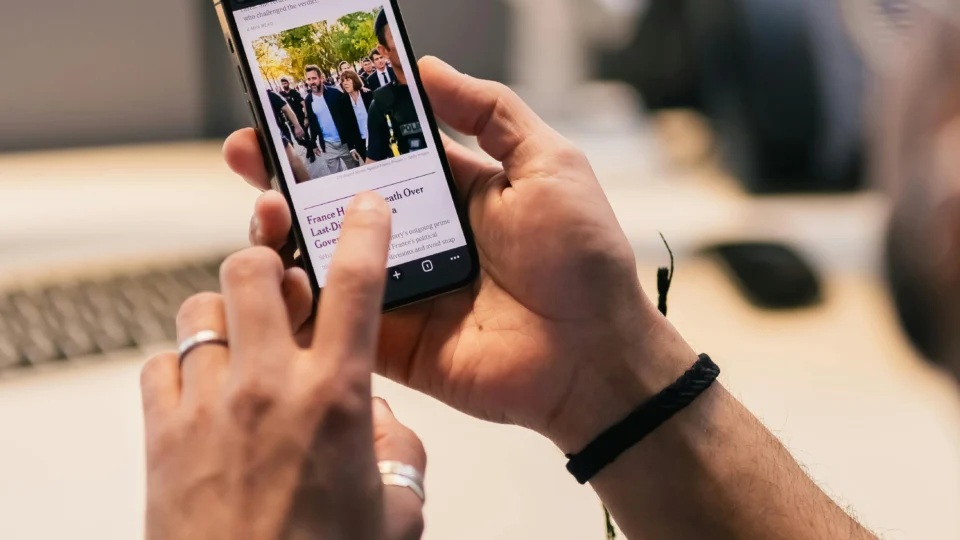
In a quiet Bay Area office, a venture capitalist sketches out a future where reaching for a phone to jot down an idea feels as outdated as dialing a rotary phone. This vision, rooted in emerging AI-driven alternatives, challenges the dominance of smartphones in daily life.
The Evolving Landscape of Human-AI Interaction
The integration of artificial intelligence into everyday devices is prompting a reevaluation of how humans connect with technology. Traditional smartphones, once Innovative, are increasingly seen as inefficient intermediaries between users and intelligent systems. Analysts point to their limitations in seamless interaction—such as frequent manual inputs that disrupt workflows—as key drivers for innovation in alternative interfaces. This shift aligns with broader AI advancements, where voice, gesture, and neural inputs could redefine productivity and creativity.
True Ventures’ Strategic Bets on New Interfaces
True Ventures, a firm managing approximately $6 billion across 12 seed funds and four opportunity funds, has built a 20-year track record on early investments in transformative hardware. With a portfolio of around 300 companies, it has achieved 63 exits yielding gains and seven initial public offerings (IPOs). In the fourth quarter of 2025 alone, three of its four exits involved repeat founders, underscoring the firm’s emphasis on long-term relationships over flashy deal-making. The firm’s approach prioritizes seed-stage investments of $3 million to $6 million for 15% to 20% ownership, focusing on startups that pioneer natural human-technology interactions.
Historical successes include early backing of fitness trackers, connected exercise equipment, and smart home devices—each enabling behaviors that felt intuitive at the time but Innovative in hindsight. This philosophy persists amid the AI surge, where True Ventures avoids mega-rounds and instead targets applications that leverage AI for behavioral change. Jon Callaghan, co-founder of True Ventures, articulates this stance clearly: “We’re not going to be using iPhones in 10 years. I kind of don’t think we’ll be using them in five years—or let’s say something different that’s a little safer—we’re going to be using them in very different ways.” He critiques current devices as “super inefficient [and] not a great interface,” prone to errors and life disruptions.
- Key Investment Themes: Emphasis on hardware-software hybrids that address unmet needs, such as effortless idea capture.
- Capital Discipline: True Ventures raises targeted funds to support scaling winners, rejecting the need for billions in a landscape where smaller sums can build impactful AI tools.
- AI Market Outlook: While acknowledging OpenAI’s potential trillion-dollar valuation and a massive compute wave, Callaghan flags risks in the sector’s capital intensity, including projected $5 trillion in capital expenditures for data centers and chips by hyperscalers.
Spotlight on Sandbar: A Voice-Activated Thought Companion
A recent investment exemplifying this strategy is Sandbar, a hardware startup developing a voice-activated ring worn on the index finger. Designed solely for capturing and organizing thoughts through voice notes, the device—dubbed Stream—avoids broader features like health tracking or multimedia controls, focusing instead on a core human need: spontaneous idea documentation. Founders Mina Fahmi and Kirak Hong bring expertise from CTRL-Labs, a neural interface company acquired by Meta in 2019.
Their ring pairs with an AI-powered app to process voice inputs actively, acting as a “thought partner” rather than a passive recorder. Callaghan highlights the alignment: “When we met Mina, we were just absolutely aligned on vision… It’s about what [the ring] enables. It’s about the behavior it enables that we will very soon realize we can’t live without.” This mirrors past bets, such as on connected fitness hardware, where the value lay not in the device itself but in the habits it fostered. For Sandbar, implications include enhanced cognitive workflows for professionals, potentially reducing reliance on screens and boosting creative output in AI-augmented environments.
Market Trends and Broader Implications
The smartphone market’s saturation signals a pivotal transition. Global shipments grow at a modest 2% annually, reflecting mature adoption, while wearables—including smart rings, watches, and voice devices—expand at double-digit rates. This divergence suggests a fragmentation of interfaces, with AI enabling specialized tools that integrate into daily routines without dominating attention. Societally, such shifts could mitigate screen fatigue and privacy concerns associated with always-on phones, fostering more ambient computing. However, uncertainties remain around adoption barriers, such as battery life in wearables (flagged in industry reports as inconsistent) and regulatory hurdles for neural-adjacent tech.
Economically, the application layer of AI—where interfaces like Sandbar operate—holds the most value creation potential, outpacing infrastructure investments. Callaghan’s investing ethos encapsulates the risk-reward dynamic: “It should be scary and lonely and you should be called crazy… And it should be really blurry and ambiguous, but you should be with a team that you really believe in.” As AI evolves, these alternative interfaces may accelerate productivity gains, estimated at 20-30% in knowledge work per recent studies, while reshaping device markets valued at over $500 billion. How do you envision these AI-driven interfaces impacting your daily interactions with technology?